A small fitting can slow a whole line.1 A weak choice leaks air, wastes time, and turns simple maintenance into repeated shutdowns.
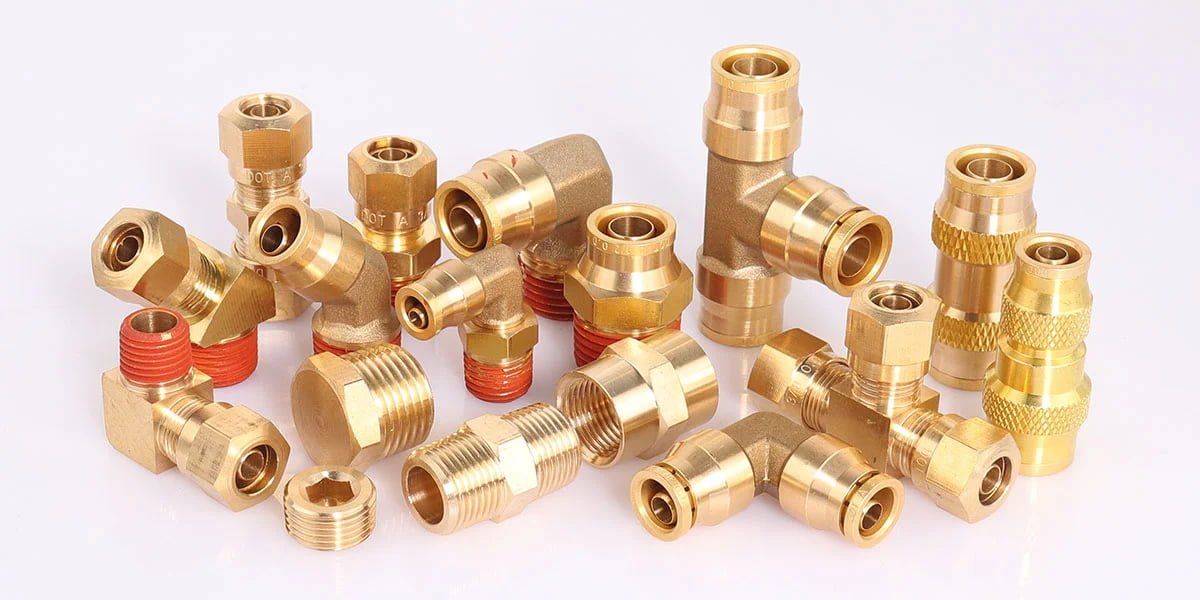
I see push-to-connect fittings as system parts, not simple accessories. They help automation teams connect tubing faster, reduce leakage risk2, simplify maintenance, control spare parts, and support later pneumatic layout changes when they are selected with the right size, material, seal, thread, and quality level.
I do not look at a push-to-connect fitting only as a faster way to join a tube. I look at it as a small decision that can affect downtime, inventory, replacement work, and buyer confidence. In my daily work with pneumatic components, I often see that the cheap part is not always the low-cost part. The fitting looks simple, yet it touches pressure, tube grip, seal life, and batch consistency. That is why I want to break this topic down in a practical way.
Why do I treat push-to-connect fittings as a system decision?
A fitting looks small, so it is easy to ignore. That mistake can create leaks, confusing repairs, and more downtime than expected.
I treat push-to-connect fittings as system decisions because they affect installation speed, air tightness3, maintenance time, layout flexibility, spare parts planning, and future expansion of pneumatic automation lines.
I start with the real cost, not the unit price
I do not deny that fast installation is useful. A push-to-connect fitting saves time because the operator can insert the tube without extra tools in many common applications. This is only the first benefit. I see the larger value after the machine starts running. A stable fitting helps a technician remove and replace tubing faster during maintenance. It also helps the engineering buyer keep one clear fitting standard across similar equipment. This can reduce wrong-part use and shorten repair time.
| Decision point | What I check | Why it matters |
|---|---|---|
| Installation speed | Tube insertion and release feel | It reduces assembly time |
| Seal reliability | O-ring fit and sealing surface | It lowers leakage risk |
| Layout change | Elbows, tees, straights, reducers | It supports later machine changes |
| Maintenance | Easy tube removal and replacement | It reduces service time |
| Standardization | Same thread and tube size rules | It lowers mismatch risk |
I also think about compressed air cost. Even small leakage can become a long-term waste.4 A fitting that saves a few cents at purchase can cost more if it causes air loss, rework, or complaints. From a supplier view, I pay attention to dimensional accuracy, sealing quality, and material stability because these points support the whole pneumatic system.
What selection variables do I check before I approve a fitting?
A wrong fitting can look correct during purchase. The problem often appears later, when pressure, heat, tube material, or thread mismatch exposes the weakness.
I check tube size, tube material, thread type, working pressure, temperature range, medium, seal material, and insertion quality before I treat a push-to-connect fitting as suitable.
I match the fitting to the working condition
I never assume one push-to-connect fitting fits every pneumatic application. Industrial automation uses many types of machines, tubes, and working environments. A fitting for a clean, dry, low-pressure line may not be right for a hotter area or a line with special media.5 The fitting body, collet, claw, and seal must work with the tube and the actual working condition.
| Variable | My basic question | Common risk if ignored |
|---|---|---|
| Tube outer diameter | Is the OD exact and stable? | Loose grip or hard insertion |
| Tube material | Is it PU, nylon, PE, or another type? | Poor sealing or tube damage |
| Thread type | Is it BSPT, NPT, metric, or BSPP? | Leakage or failed assembly6 |
| Pressure | Is it within the fitting rating? | Blow-off or seal failure |
| Temperature | Is the seal rated for the range? | Hardening, cracking, or leakage |
| Medium | Is it clean compressed air or something else? | Seal swelling or material damage |
| Installation | Is the tube cut flat and fully inserted? | Hidden leakage after startup |
I also look at the seal. NBR, FKM, and other materials behave differently.7 The best choice depends on temperature, oil exposure, and media. I do not claim one seal is always better. I ask what the system needs. In production and inspection work, I care about stable O-ring size, clean sealing surfaces, and proper thread finish. These details look small, yet they decide whether a fitting seals well across many batches.
Why do I challenge the idea that all push-to-connect fittings are basically the same?
A fitting can look identical in a catalog. The difference often appears after bulk use, when leakage, loose tubes, and returns begin.
I challenge this idea because material consistency, machining accuracy, seal quality, tube grip, thread control, and batch stability can vary a lot between suppliers and price levels8.
I look beyond the outside shape
I have seen many buyers compare fittings by photo, thread, and price first. I understand this habit because procurement teams have cost targets. Still, I do not think the photo tells enough. A push-to-connect fitting depends on inner parts that the buyer may not see. The collet must grip the tube without cutting it. The seal must stay in place. The body must hold pressure. The thread must match the receiving port. The release ring must work after repeated use.
| Visible feature | Hidden quality point | Possible hidden cost |
|---|---|---|
| Same body shape | Different plastic or brass quality | Cracking or weak thread |
| Same tube size | Different claw force | Tube slip or damage |
| Same thread name | Different thread tolerance | Leakage at assembly |
| Same seal color | Different seal compound | Early hardening or swelling |
| Same low price | Different batch control | Returns and complaints |
I do not say every lower-cost fitting is poor. I say the buyer should check what supports that price. If the supplier has weak batch control, the first shipment may pass, and the next shipment may create problems. This is serious for distributors and equipment builders because they carry the after-sales burden. A low purchase price can become a high support cost if the parts create repeat claims.9 That is why I place weight on inspection records, stable materials, and clear specifications.
How do I use standardization to reduce mismatch and inventory waste?
Too many fitting types create slow purchasing and wrong replacements.10 Too few types can force bad substitutions and make maintenance risky.
I use standardization by building a clear fitting range around common tube sizes, thread types, shapes, and spare needs, while avoiding unnecessary SKUs.
I make the range easy to buy and easy to replace
For procurement teams, integrators, and distributors, standardization is not only a warehouse issue. It also affects service speed. If a technician opens a spare box and finds three similar fittings with different threads, the risk of wrong assembly rises11. If a distributor lists too many rare models, stock value rises and turnover slows. I prefer a clear range that covers the main needs without becoming confusing.
| SKU control area | My practical rule | Result I want |
|---|---|---|
| Tube size | Focus on common OD sizes first | Faster replacement |
| Thread type | Separate NPT, BSPT, BSPP, metric clearly | Lower mismatch risk |
| Shape | Keep straights, elbows, tees, reducers organized | Easier system layout |
| Packaging | Use clear labels and part numbers | Fewer picking errors |
| Documentation | Keep drawings and specs consistent | Faster buyer approval |
I also think standardization supports expansion. When a machine builder adds more pneumatic points, the same fitting family can help keep the layout clean. When a distributor serves many customers, a stable product range makes stock planning easier. I do not see SKU reduction as simply cutting choices. I see it as choosing the right choices. The goal is to give engineers enough flexibility, while giving buyers fewer chances to make an expensive mismatch.
What quality checks do I value from a pneumatic component supplier?
A good-looking fitting can still fail if the supplier has weak control. I need repeatable quality, not only one good sample.
I value checks on material consistency, dimensional accuracy, sealing reliability, thread quality, tube compatibility, air tightness, and batch traceability before bulk supply.
I trust process control more than slogans
From my side as a pneumatic component supplier, I know that quality is built through repeated checks. I do not present myself as an automation system designer or field commissioning engineer. I speak from the production and inspection side. I care about whether the fitting can be made the same way, again and again. A sample is useful, yet bulk supply is the real test.
| Quality item | What I want to confirm | Why I care |
|---|---|---|
| Material | Body, collet, seal, and metal parts are stable | It supports service life |
| Dimensions | Tube port, thread, and sealing areas are controlled | It supports fit and seal |
| Air tightness | The fitting holds pressure under test rules | It reduces leakage risk |
| Tube insertion | Tube enters smoothly and locks properly | It supports assembly quality |
| Thread finish | Thread is clean and within tolerance | It reduces port leakage |
| Batch records | Production and inspection are traceable | It supports claims handling |
At BOERAY, I come from a background where pneumatic components are produced with attention to sealing, pressure, material, and inspection. I use that view when I talk about push-to-connect fittings. I do not use it to claim every industrial automation case is the same as other pneumatic markets. I use it to explain why process control matters. A buyer should ask for clear specifications, samples, drawings, and inspection terms before placing repeat orders.
How do I connect fitting choice with long-term maintenance cost?
A bad fitting may not stop a machine on the first day. It may create small losses that become expensive over time.
I connect fitting choice with maintenance cost by looking at leakage, replacement speed, tube damage, spare part clarity, technician time, and repeat complaint risk.
I measure the trouble that happens after purchase
I think many buyers are trained to look at the invoice first. I understand this. Still, the invoice does not show the full cost. A fitting that leaks slowly can make the air compressor work harder.12 A fitting that grips poorly can cause tube pull-out. A fitting with unclear labeling can lead to wrong replacement during a repair. A fitting that changes quality from batch to batch can create customer complaints that are hard to trace.
| Long-term cost area | What can go wrong | What I prefer |
|---|---|---|
| Air leakage | Higher energy use | Stable seal and correct tube fit |
| Downtime | Slow repair and part search | Clear SKU and fast replacement |
| Tube life | Tube scratch or poor grip | Correct claw design and tube match |
| After-sales | Repeat claims and unclear cause | Traceable batch records |
| Inventory | Excess slow-moving stock | Focused fitting range |
I also think maintenance teams need simple rules. The tube should be cut cleanly. The tube should be pushed fully into the fitting. The thread should be sealed in the correct way for its type. The fitting should not be used outside its pressure or temperature range. These basic steps do not sound exciting, yet they prevent many problems. I see the best result when product quality and installation discipline work together.
Conclusion
I choose push-to-connect fittings as system parts, not small accessories, because the right choice improves sealing, maintenance, standardization, inventory control, and long-term reliability.
"[PDF] Minimize Compressed Air Leaks - Department of Energy", https://www.energy.gov/sites/prod/files/2014/05/f16/compressed_air3.pdf. A reliability or maintenance study on pneumatic or compressed-air systems would support the claim that local component faults can affect wider equipment availability; such evidence would be contextual unless it specifically measures push-to-connect fitting failures. Evidence role: general_support; source type: paper. Supports: A source should show that small pneumatic component failures or compressed-air faults can contribute to equipment downtime or reduced production availability.. Scope note: Contextual support is likely because the article does not identify a specific line, fitting model, or measured downtime event. ↩
"ISO 14743:2004(en), Pneumatic fluid power", https://www.iso.org/obp/ui/#!iso:std:36441:en. A pneumatic connector standard such as ISO 14743 would support that push-in connectors are subject to leakage-related requirements and test conditions, supporting the role of correct fitting selection in leakage control; it would not prove that any specific supplier's fitting reduces leakage. Evidence role: mechanism; source type: institution. Supports: A standards or technical source should explain that push-in pneumatic connectors are evaluated for leakage and that compatibility with tube size, pressure, and sealing conditions affects performance.. Scope note: Standards support the mechanism and testing context, not comparative performance of the article's preferred products. ↩
"ISO 14743:2020(en), Pneumatic fluid power", https://www.iso.org/obp/ui/en/#!iso:std:73164:en. Pneumatic connector standards that specify leakage or pressure-holding tests support treating air tightness as a relevant quality-control item for push-to-connect fittings; such standards do not by themselves prove that any production batch has passed those tests. Evidence role: expert_consensus; source type: institution. Supports: A pneumatic connector standard should indicate that leakage or pressure-holding performance is part of connector evaluation.. Scope note: The source would justify the inspection category, not certify the author's products. ↩
"[PDF] Improving Compressed Air System Performance", https://www.compressedairchallenge.org/data/sites/1/media/library/sourcebook/Improving_Compressed_Air-Sourcebook.pdf. The U.S. Department of Energy's compressed-air system guidance documents that air leaks increase energy consumption and operating cost, supporting the claim that even small leaks can become long-term waste; the exact cost depends on local pressure, operating hours, electricity price, and leak size. Evidence role: statistic; source type: government. Supports: A government energy-efficiency source should document that compressed-air leaks waste energy and can create continuing operating costs over time.. Scope note: The evidence would quantify typical compressed-air leakage costs, not the cost of the specific fittings discussed in the article. ↩
"PNEUMATIC GROUND SYSTEMS DEVELOPMENT ...", https://standards.nasa.gov/sites/default/files/standards/KSC/D/0/Historical/KSC-STD-Z-0005C.pdf. Technical standards and materials references for pneumatic connectors and elastomer seals support that pressure rating, temperature range, and media compatibility affect safe fitting selection; this support is general and does not evaluate a particular application described by the author. Evidence role: mechanism; source type: institution. Supports: A technical standard or materials reference should support that pressure, temperature, and media compatibility are part of selecting pneumatic fittings and seals.. Scope note: The evidence would establish selection principles rather than verify a specific installation condition. ↩
"NPT vs. BSP Threads: Key Differences and Applications - Titan Fittings", https://www.titanfittings.com/articles/npt-vs-bsp-threads-key-differences-and-applications?srsltid=AfmBOoq4pSoz4fZXgnBLeLLgr26gqy2TaIWoCaRUNlLuAQAVIHOUzQrf. Engineering references on pipe-thread standards show that NPT, BSPT, BSPP, and metric threads differ in form and sealing behavior, supporting the warning that thread mismatch can lead to leakage or failed assembly; the source would not identify the failure rate in this article's applications. Evidence role: definition; source type: encyclopedia. Supports: A thread-standard reference should explain that NPT, BSPT, BSPP, and metric threads differ in geometry and sealing method, making mismatches prone to improper assembly or leakage.. Scope note: The evidence supports the compatibility principle, not a measured probability of failure. ↩
"FKM - Wikipedia", https://en.wikipedia.org/wiki/FKM. Materials references distinguish nitrile rubber from fluorocarbon elastomers such as FKM in chemical and temperature resistance, supporting the statement that seal materials behave differently; they do not determine which material is optimal without the actual medium and operating range. Evidence role: definition; source type: encyclopedia. Supports: A materials reference should describe differences between nitrile rubber and fluorocarbon elastomers in resistance to oils, chemicals, and temperature.. Scope note: The source would support comparative material properties, not a specific seal choice for every pneumatic system. ↩
"System Performance and Process Capability in Additive Manufacturing", https://pmc.ncbi.nlm.nih.gov/articles/PMC7361965/. Manufacturing quality-management and statistical process-control sources support that process control, inspection, and supplier capability influence dimensional consistency and batch-to-batch variation; this is contextual evidence rather than direct proof about all push-to-connect fitting suppliers. Evidence role: expert_consensus; source type: institution. Supports: A manufacturing quality standard or process-control source should support that supplier process control affects dimensional consistency, tolerances, and batch-to-batch quality.. Scope note: The evidence would support the quality-control principle, not rank suppliers or price levels. ↩
"Life Cycle Cost (LCC) | www.waru.edu", https://www.waru.edu/acquipedia-article/life-cycle-cost-lcc. Total-cost-of-ownership literature supports evaluating purchase price together with maintenance, failure, warranty, and support costs, which contextualizes the claim that a low-price part can become costly when it generates repeat claims; the evidence would not establish that any specific fitting has that cost outcome. Evidence role: expert_consensus; source type: paper. Supports: A procurement or lifecycle-costing source should support that purchase price is only one component of total cost and that defects or claims can increase downstream cost.. Scope note: The support is conceptual unless paired with fitting-specific field data. ↩
"Enhancing industrial maintenance planning: Optimization of human ...", https://www.sciencedirect.com/science/article/pii/S2214716025000120. Operations and maintenance-management literature on spare-part standardization supports that excessive part variety can increase inventory complexity and part-selection difficulty, lending support to the claim that too many fitting types can slow purchasing and lead to wrong replacements; it may not focus specifically on pneumatic fittings. Evidence role: general_support; source type: paper. Supports: A maintenance or operations-management source should show that spare-part standardization can reduce complexity, procurement burden, or incorrect part selection.. Scope note: The evidence is likely about spare parts broadly, not only push-to-connect fittings. ↩
"Classification and Quantification of Human Error in Manufacturing", https://www.mdpi.com/2076-3417/11/2/749. Human-factors and error-proofing research supports that visually similar parts and insufficient differentiation can increase the likelihood of selection or assembly errors, supporting the article's warning about similar fittings with different threads; this evidence is contextual unless it studies pneumatic fittings directly. Evidence role: mechanism; source type: paper. Supports: A human-factors or manufacturing quality source should support that similarity between parts and unclear differentiation can increase assembly errors.. Scope note: The mechanism applies broadly to assembly work and may not provide fitting-specific error rates. ↩
"Compressed Air Systems | Department of Energy", https://www.energy.gov/cmei/ito/compressed-air-systems. Government compressed-air efficiency guidance explains that leaks increase system air demand and compressor energy consumption, supporting the claim that a slowly leaking fitting can make the compressor work harder; the magnitude depends on leak size, pressure, controls, and operating schedule. Evidence role: mechanism; source type: government. Supports: A government energy-efficiency source should explain that leaks in compressed-air systems increase air demand and therefore compressor energy use or run time.. Scope note: The evidence supports the mechanism but not the exact energy impact of any single fitting. ↩